
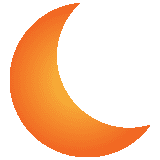
Waning gibbousAbout 84% illuminated
Tonight's stargazing score
24/100
Not suitable for stargazing
- Average cloud
- 47%
- Chance of rain
- 75%
- Moonrise
- 8:50 PM
- Moonset
- 12:08 PM
Hourly cloud cover tonight in Iowa
The lower the bar, the clearer the sky. Pick the least cloudy hours, stay away from street lights and give your eyes about 20 minutes to adjust to the dark.
Moon phase for the next 8 nights
Today
Oct 29
Waning gibbous
Rises 8:50 PM · Cloud 0%
Tomorrow
Oct 30
Waning gibbous
Rises 10:02 PM · Cloud 97%
Sat
Oct 31
Waning gibbous
Rises 11:19 PM · Cloud 97%
Sun
Nov 1
Last quarter
Rises 11:35 PM · Cloud 41%
Mon
Nov 2
Waning crescent
Rises – · Cloud 100%
Tue
Nov 3
Waning crescent
Rises 12:47 AM · Cloud 100%
Wed
Nov 4
Waning crescent
Rises 1:58 AM · Cloud 100%
Thu
Nov 5
Waning crescent
Rises 3:06 AM · Cloud 1%
Meteor shower calendar
Every year
Next meteor shower
Leonids
Peaks on the night of Nov 17–18 · about 15 meteors/hour under ideal skies · Leo, before dawn.
Peak night: waxing gibbous (60% illuminated), so dark skies should make for good viewing.
19days to go
| Meteor shower | Peak | Meteors/hr | Where to look |
|---|---|---|---|
| Quadrantids | Jan 3–4 | 110 | Boötes, before dawn |
| Lyrids | Apr 22–23 | 18 | Lyra, after midnight |
| Eta Aquariids | May 5–6 | 50 | Aquarius, before dawn |
| Perseids | Aug 12–13 | 100 | Perseus, after 11 PM |
| Orionids | Oct 21–22 | 20 | Orion, after midnight |
| Leonids | Nov 17–18 | 15 | Leo, before dawn |
| Geminids | Dec 13–14 | 150 | Gemini, all night |
| Ursids | Dec 22–23 | 10 | Ursa Minor, before dawn |
Peak dates can shift by a day from year to year. The meteors-per-hour figure (ZHR) assumes perfectly dark skies; in cities you will usually see only a small fraction.
Stargazing tips for Iowa
- Choose a night near the new moon, or wait until the Moon has set, with cloud cover below 30%.
- Head away from built-up areas to hills, highlands or a beach with few lights.
- No telescope needed: meteor showers are best seen with the naked eye, which takes in the whole sky.
- Bring insect repellent and a light jacket; dim your phone screen or switch to red-light mode so your eyes stay dark-adapted.